
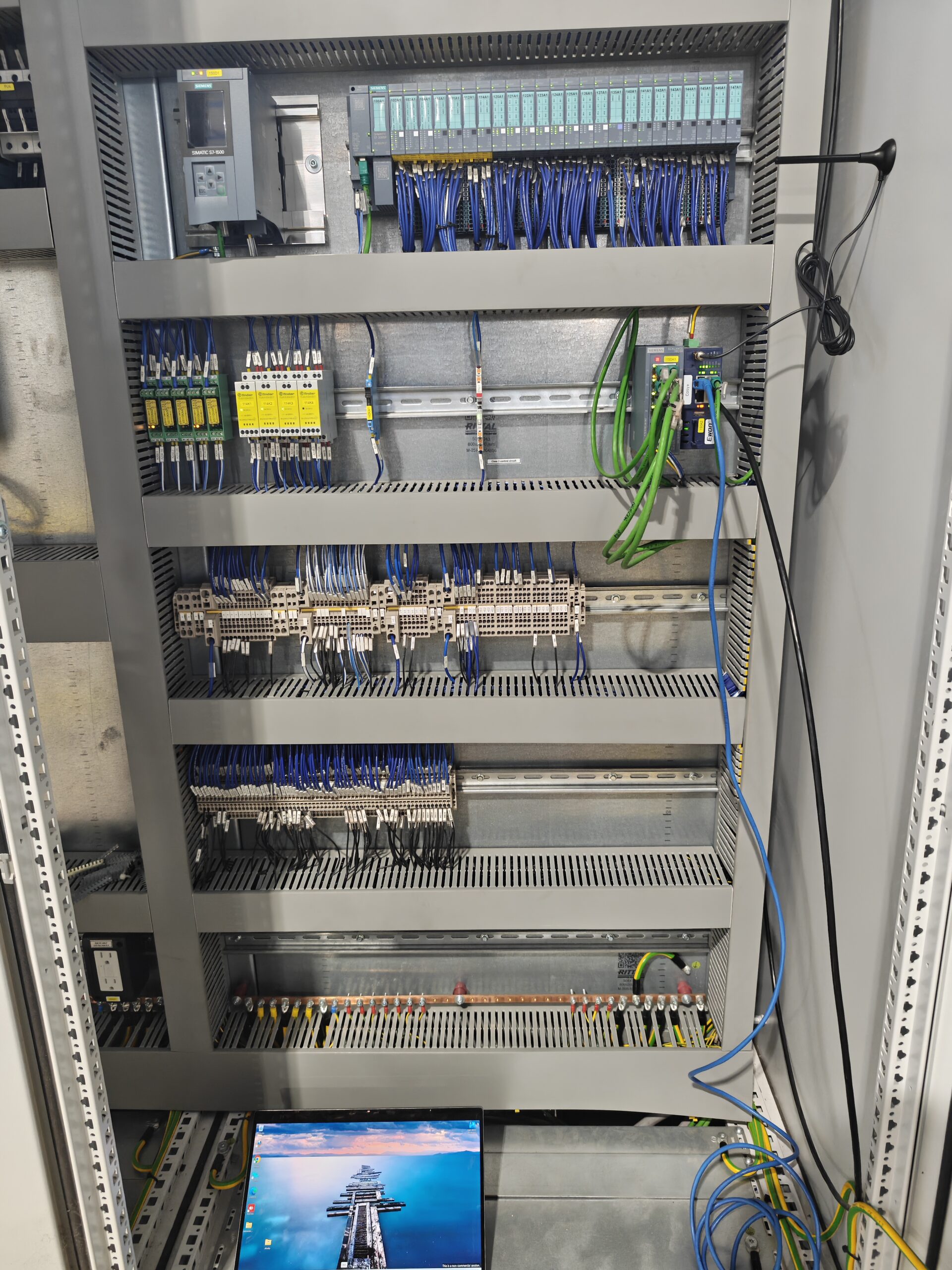
We set up remote connectivity for a new splitter system at a Fort Myers paver plant earlier this week. The goal was straightforward: give the client and their equipment provider reliable access to the system’s PLCs from anywhere, with failover to keep the plant running if the primary connection drops.
Working with Penta to establish connectivity
We coordinated with Penta, the hardware provider, to get the PLCs online. They know the equipment inside and out, and we handle the network side. This kind of collaboration keeps projects moving without either team stepping on the other’s toes.
Ewon Cosy+ for secure remote access
We deployed an Ewon Cosy+ to bridge the PLCs to the internet. The Cosy+ creates a secure VPN tunnel, so technicians can troubleshoot and adjust settings remotely without exposing industrial equipment directly to the internet. For a manufacturing plant, that remote visibility means problems get diagnosed faster and downtime shrinks.
Failover connectivity for reliability
The system includes failover connectivity. If the primary internet connection goes down, the Cosy+ automatically switches to a backup connection. In a production environment where every hour of downtime has a real cost, that redundancy matters. The splitter keeps running, and remote access stays up even when the main line doesn’t.
Remote connectivity for industrial equipment isn’t just convenient—it’s becoming standard practice for plants that want to stay competitive. When your team or your vendor can see what’s happening on the floor without driving to the site, you solve problems faster and keep production moving.
If you’re adding new equipment or want to improve visibility into your manufacturing systems, let’s talk through what makes sense for your operation.