
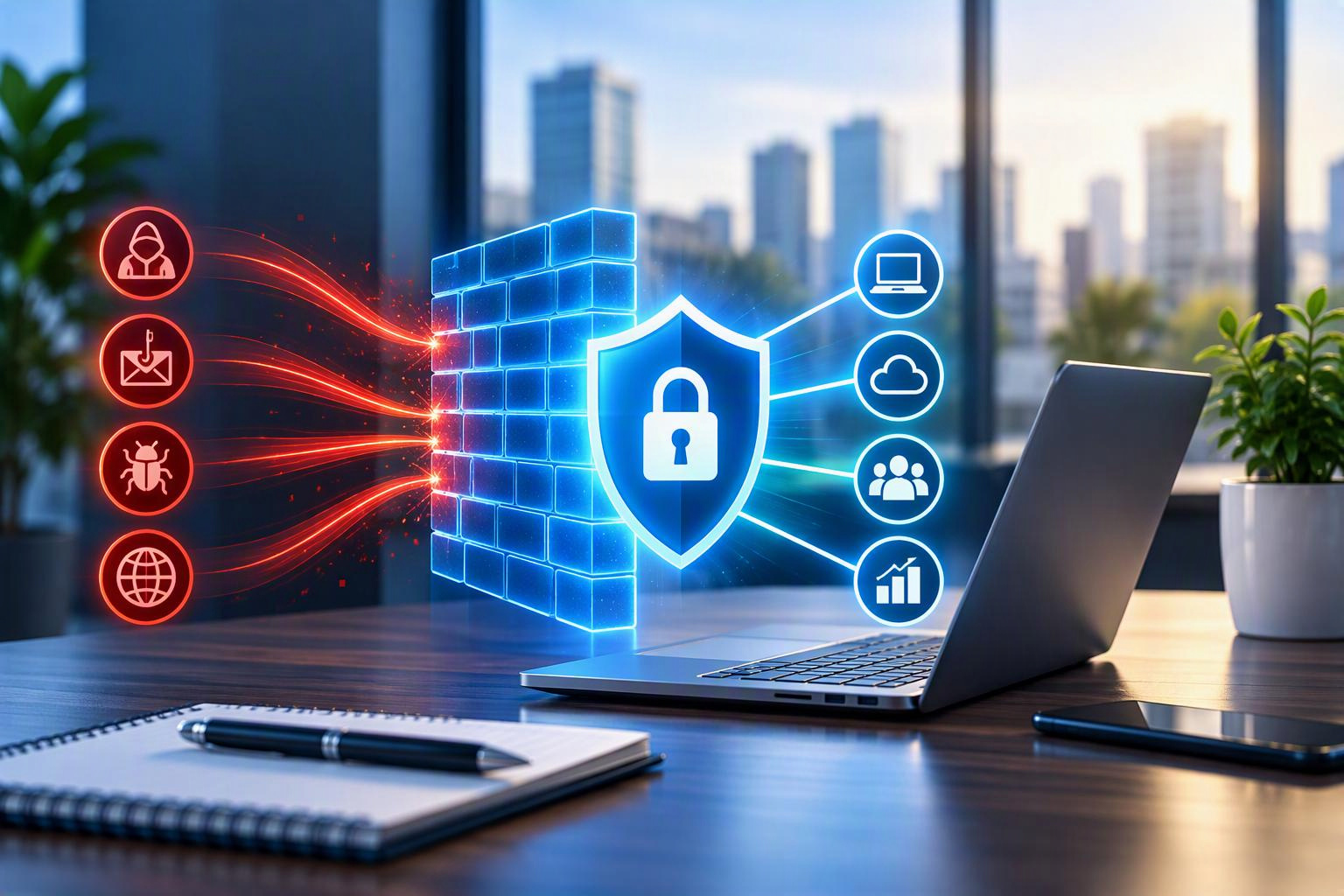
We still run into businesses that don’t have a firewall protecting their network. It’s more common than you’d think, especially with small companies that grew organically or those who’ve been cobbling together IT as they go. Usually it’s not a conscious decision—it’s just that nobody ever set one up, or an old one died and never got replaced.
What a firewall actually does
A firewall sits between your internal network and the internet. It controls what traffic can come in and what can go out based on rules you set. Without one, every device on your network is directly exposed to whatever’s scanning the internet looking for vulnerable systems. That’s printers, computers, servers, cameras—everything.
How businesses end up without one
The most common scenario: a company starts small with just a basic router from their internet provider. Those consumer-grade boxes have minimal protection. As the business grows and adds servers or remote access, nobody thinks to upgrade the security at the edge. Another pattern we see is after a provider change—the old firewall gets unplugged during an internet upgrade and just never makes it back into the rack.
Sometimes a previous IT person left and took their knowledge with them. The firewall might still be there physically, but nobody knows the login or how to manage it, so it gets bypassed.
What’s actually at risk
Without a firewall, you’re relying entirely on each individual device to protect itself. That works until it doesn’t—one unpatched workstation or a printer with default credentials becomes an entry point. We’ve seen ransomware walk right in through exposed Remote Desktop Protocol ports. We’ve seen compromised email servers because they were directly internet-facing with no filtering layer.
It also means no logging or visibility into what’s happening at your network perimeter. When something does go wrong, there’s no record of where the attack came from or what it touched first.
Getting protected doesn’t have to be complicated
Modern firewalls, such as Junopi’s preference, pfSense, are manageable and don’t require a networking degree to maintain. They include threat prevention, content filtering, and VPN capabilities that most businesses need anyway. The initial setup takes some planning—documenting what services need to be accessible and from where—but once it’s done, it runs quietly in the background doing its job.
If you’re not sure what’s protecting your network perimeter, or if you inherited an IT setup that nobody fully understands, it’s worth having someone take a look. We do network assessments that map out what’s there and what’s missing. Sometimes it’s a quick fix. Sometimes it’s a bigger project. Either way, you’ll know what you’re working with.
Questions about your network security? We’re happy to walk through what makes sense for your specific situation. Get in touch and we’ll schedule a time to talk.